Cortexlab, UCL
Research Engineer
Machine learning methods for large-scale neural data, working with Prof. Kenneth Harris at the UCL Queen Square Institute of Neurology.
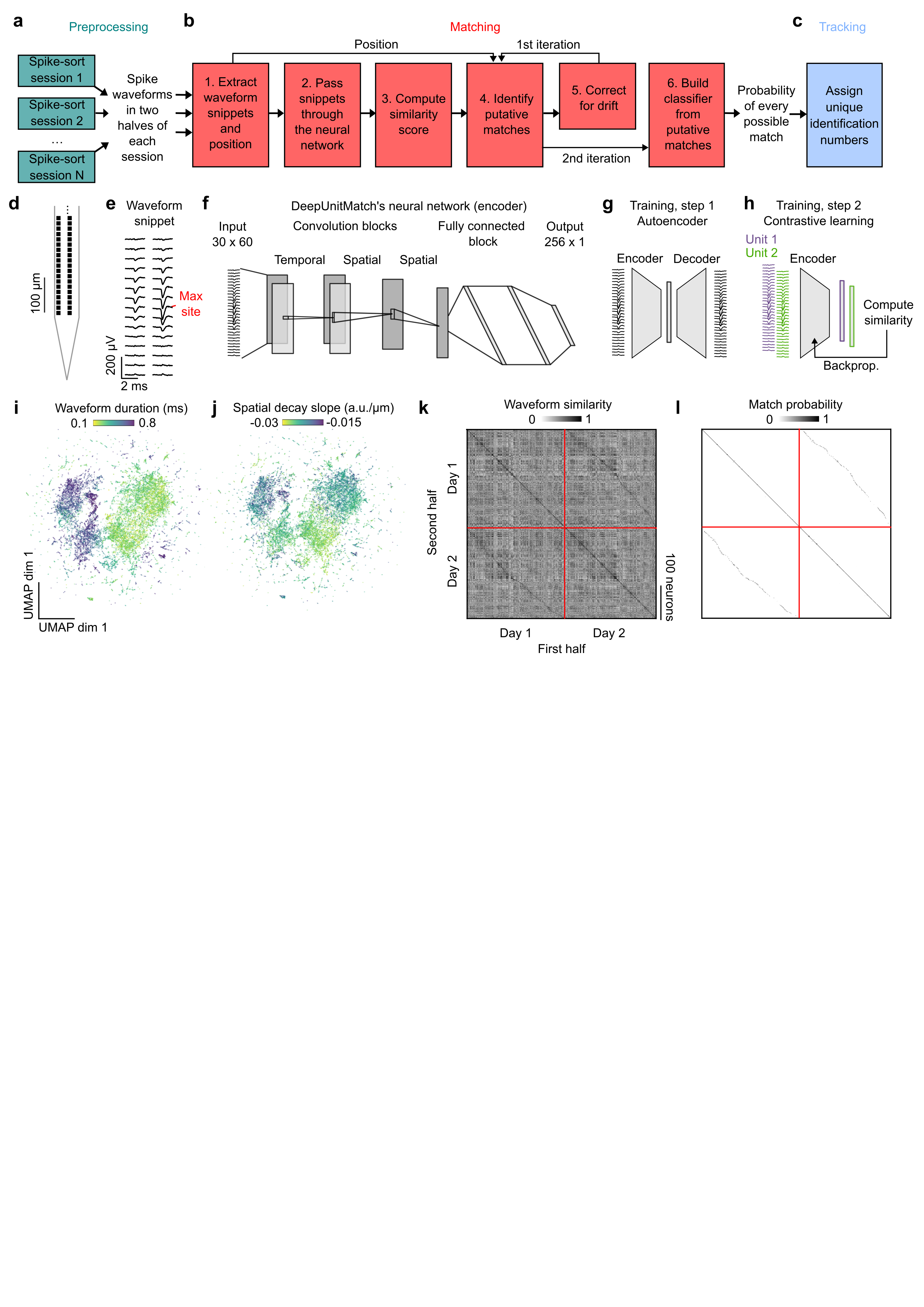
- Developed DeepUnitMatch, a method to identify neurons in electrophysiology data, letting neuroscientists track more neurons over longer timescales and with greater accuracy.
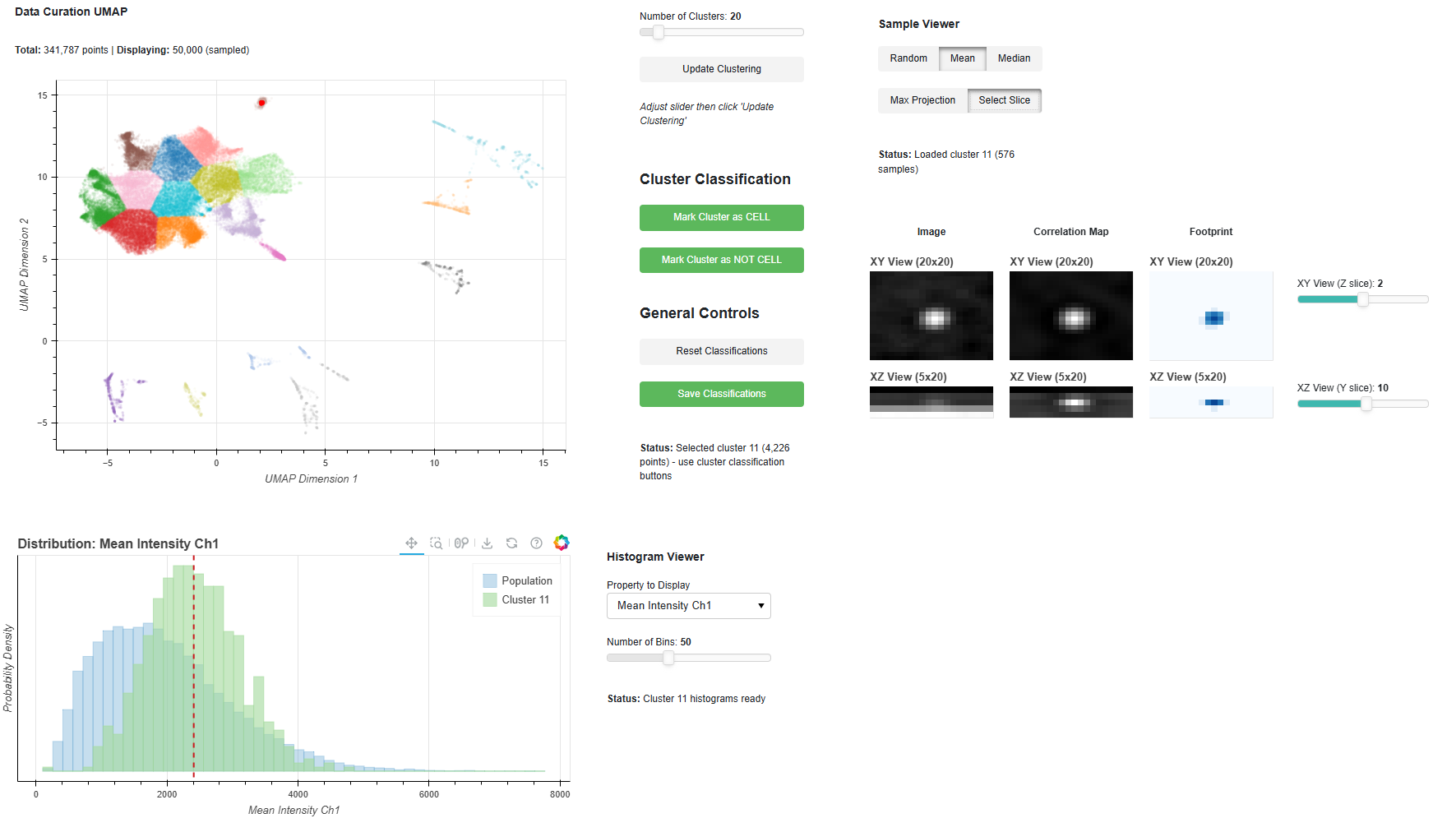
- Created a data curation tool for multi-channel 3D volumetric calcium imaging data from Suite3D.
- Built Alfred, an LLM-powered tool for automatic data analysis, used by researchers at Google DeepMind.
DeepUnitMatch
A neural network method for tracking neurons via their electrophysiological spike waveforms, using contrastive learning and a spatio-temporal autoencoder architecture to beat the previous state of the art.
Alfred
An LLM-powered tool for automatic data analysis, used by scientists at UCL, Google DeepMind and the International Brain Lab, as well as professionals in consulting and finance. The central idea is to keep the human in the loop: AI speeds up the boring parts of data analysis so you can focus on the interesting ones. No programming knowledge is required, and you choose how close to the code you want to be.
I am the sole developer, building the backend in Python and Flask and the frontend in React and Node.js.
Suite3D curation
A data curation tool for volumetric cell imaging data acquired via Suite3D. The goal is a generalisable way to learn a latent space that captures 3D image features. A 2D projection of that space (via PCA then UMAP, below) gives scientists something they can see and interact with — clustering ROIs and classifying each cluster as cells or not cells, so curation is fast, data-driven and still human-led.